
Your air conditioner doesn’t cause colds — the cold air itself isn’t the problem. But a dirty, poorly maintained AC system can circulate mould, bacteria, allergens and fine particulate matter through your home every time it runs. The research connecting poorly maintained AC systems to respiratory symptoms is clear, and Queensland’s climate accelerates the conditions that cause the problem.
What Builds Up Inside a Dirty AC Unit
Air conditioning works by drawing room air across a cold evaporator coil, which cools the air and causes moisture to condense on the coil’s surface. That moisture, combined with the organic particles in the air — dust, pollen, skin cells, pet dander — creates ideal conditions for biological growth.
- Mould — Mould colonies establish on the evaporator coil, in the drain tray and on the blower fan within weeks in Queensland’s humidity. Once established, the fan distributes mould spores through the room. Mould spores are a known trigger for asthma attacks, allergic rhinitis and eye irritation.
- Bacteria — Standing water in a partially blocked drain tray becomes a bacterial culture medium. Species of Legionella, Pseudomonas and Staphylococcus have been found in contaminated AC drain systems. While large commercial systems present the highest Legionella risk, residential units in poor condition are not immune.
- Dust and particulate matter — Filters that haven’t been cleaned in months restrict airflow and recirculate fine particulate matter — including particles small enough to penetrate deep into the lungs.
- Allergens — Pollen, pet dander and dust mite particles trapped in the filter and on the coil are recirculated through the home every time the system runs.
Who Is Most at Risk?
- Children — Children breathe more air relative to their body weight than adults. Their developing immune and respiratory systems are more sensitive to airborne irritants. Research has associated indoor air quality with children’s ability to concentrate and perform cognitive tasks.
- Asthma and allergy sufferers — Mould spores and dust mite allergens are among the most common asthma and allergy triggers. A dirty AC that runs daily is a continuous exposure source.
- Elderly residents — Age-related decline in immune function makes the elderly more susceptible to respiratory infection from airborne bacteria and mould.
- Infants — Newborns and infants spend most of their time indoors and have no established immune resistance to environmental allergens.
Healthy adults are less likely to experience significant symptoms, but even among healthy adults, studies have found increased rates of fatigue, difficulty concentrating and eye symptoms in buildings with poorly maintained air conditioning.
Symptoms That May Be Related to Your AC
If anyone in your household experiences any of the following and symptoms improve when away from home (particularly when the AC isn’t running), your unit may be a contributing factor:
- Nasal congestion or runny nose that doesn’t resolve
- Frequent sneezing, particularly when the AC first turns on
- Itchy, watery or red eyes
- Persistent cough or throat irritation
- Worsening asthma symptoms
- Fatigue or headaches during warmer months when the AC runs constantly
- Skin dryness or irritation
These symptoms are non-specific — they have many possible causes. But if they’re seasonal and correlate with AC use, the system is worth investigating.
The Queensland Compounding Factor
Queensland’s humidity means AC systems here run significantly longer than in cooler, drier states. A Brisbane family running their split system 8+ hours a day through summer is doing more condensation cycles per year than a Melbourne household doing the same — which means faster mould establishment and more rapid filter loading.
Coastal properties deal with additional salt-laden air that accelerates coil corrosion. Homes near bushland draw in higher concentrations of pollen and organic particles. Investment properties and holiday lets that run heavily during peak season without regular maintenance between stays often have the most severely contaminated systems.
If your system has a musty or stale smell when it runs, that smell is mould and bacteria being distributed through your home. Learn more about why AC units smell and what causes it.
What Professional Cleaning Does
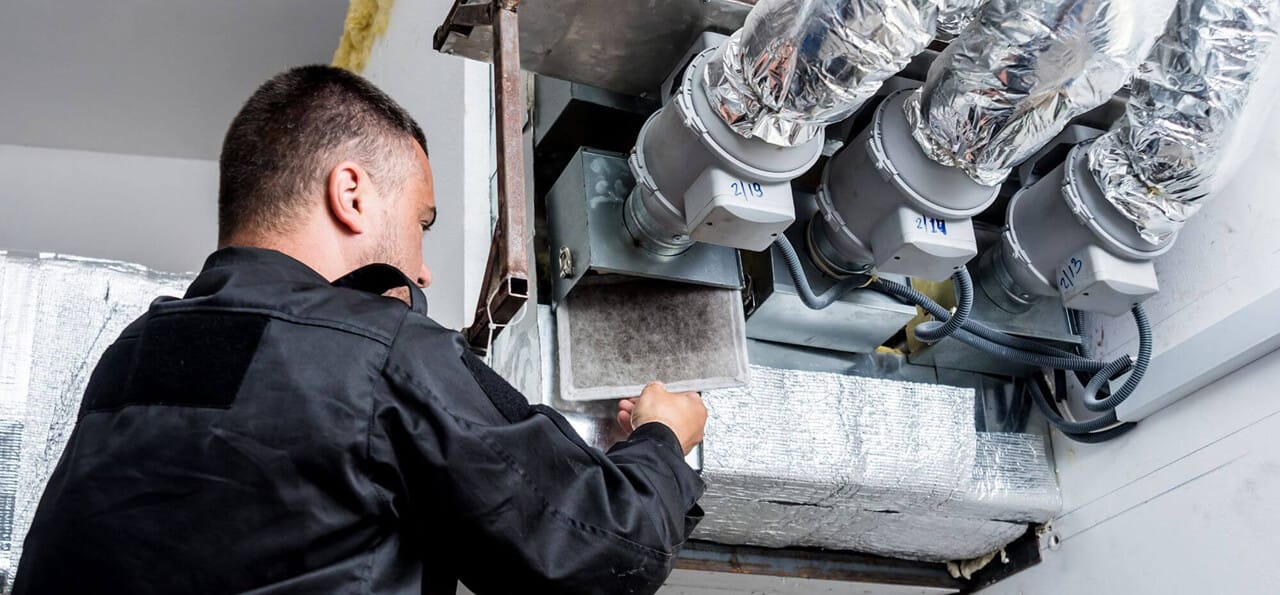
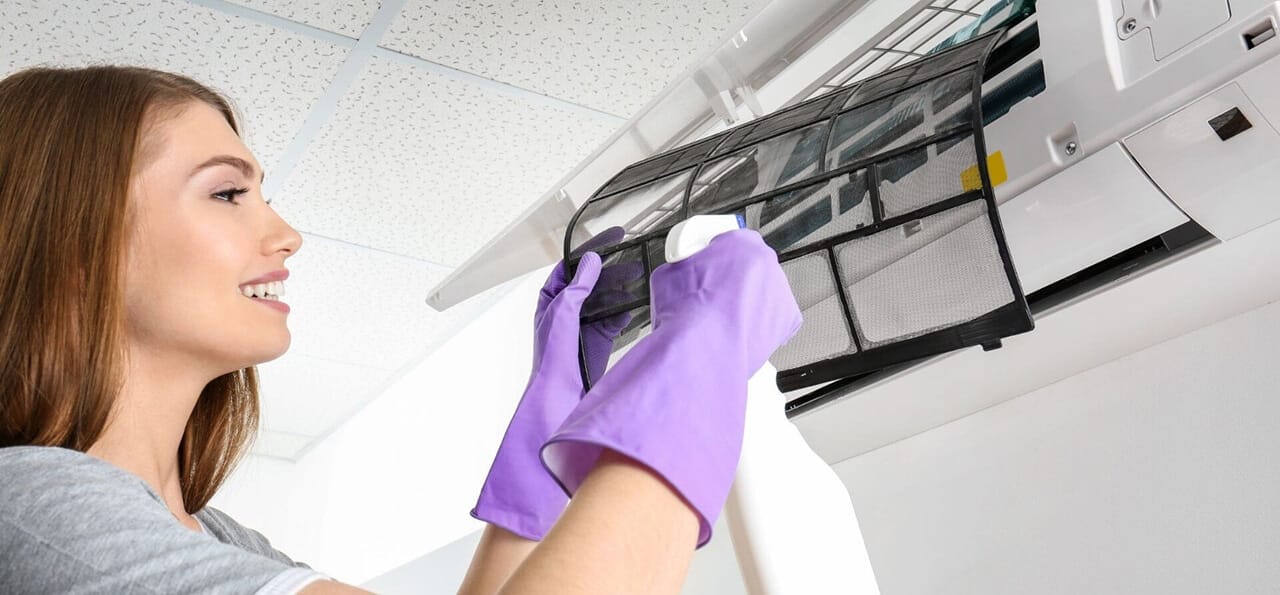
A professional air conditioner cleaning service removes the contamination at its source:
- Evaporator coil cleaned and sanitised with antifungal foam
- Drain tray flushed and cleared
- Blower fan cleaned of dust and mould accumulation
- Filters removed, cleaned and sanitised
- Corrosion checked and flagged
- Full function test on completion
The result is air being circulated through a clean system rather than one coated in mould and bacteria. Most customers report an immediate improvement in airflow quality and the elimination of musty odours.
How Often Is Enough?
Annual cleaning is the minimum recommendation for Queensland properties. Systems that run daily through summer — particularly in households with children, asthma sufferers, or elderly residents — benefit from cleaning every 6 months.
For investment properties and holiday lets, scheduling a professional clean at the start of peak season and again before the quiet period protects guests and maintains the system in good condition.
The 99 People service all AC types — split system, ducted, cassette and ceiling fan — across Brisbane, Ipswich, Gold Coast, Sunshine Coast and Noosa. Same-day bookings available. Call 1300 099 778 or book online to schedule your service.