No one likes having pests in their home or business, but if you’re dealing with mice and rats, it’s really important to take action quickly .
Rats and mice are among the most damaging household pests in South East Queensland — and one of the most underestimated. Because rodents are nocturnal and avoid humans, many infestations are well established before the first visible sign appears. By the time you hear scurrying in the roof at night, there’s usually a significant population already present.
This guide covers how to identify a rodent infestation early, what professional treatment involves, and what you can do to reduce the risk of it happening again.
Rats vs Mice: What’s the Difference?
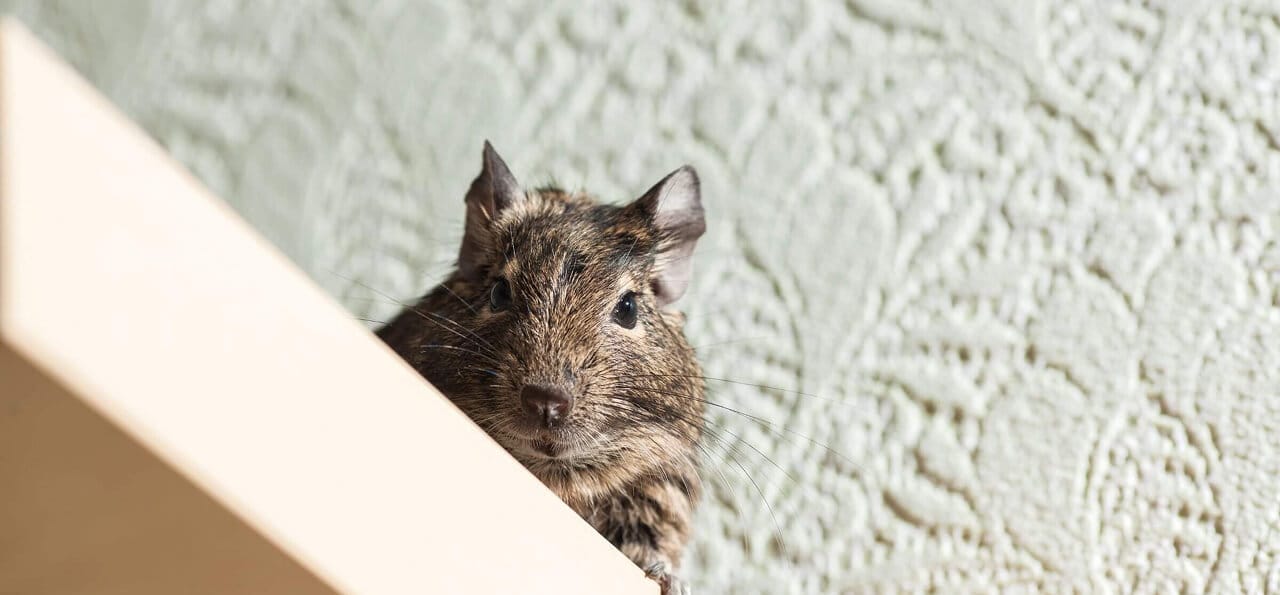
Mice are small, timid creatures that typically live in fields and woods. However, they can be very destructive when they find their way into your home. Mice will chew on wires, insulation, and wood, which can cause fires or damage your property. They also leave behind droppings that can spread disease.
Rats are larger than mice and much more aggressive. They will also chew on wires and damage your property. In addition, rats pose a serious health risk because they can carry diseases like rabies, hantavirus, and leptospirosis.
In Queensland homes, the two most commonly encountered rodent species are the roof rat and the house mouse.
Roof Rat (Rattus rattus)
Slender, agile climbers. Body length 160–200mm, tail longer than the body. The most common cause of “scurrying in the roof” reports in Queensland. Nests in roof voids and wall cavities. Droppings are 12mm long, spindle-shaped. Roof rats chew through wiring, pipe insulation and timber — a persistent infestation creates measurable fire risk.
Norway Rat (Brown Rat) (Rattus norvegicus)
Larger and heavier, 200–400mm body length. Ground-dwelling: found in sewers, under concrete slabs, in compost heaps and garden sheds. Less common in roof voids than roof rats. Droppings are 20mm long, rounded at both ends. Excellent swimmer — enters properties through drain pipes and around plumbing penetrations.
House Mouse (Mus musculus)
Much smaller than rats. Droppings 3–6mm, scattered broadly (mice urinate constantly as they move). Can squeeze through a 6mm gap. Primarily kitchen and pantry pests — contaminate food with droppings and urine. Reproduce extremely fast: a single female can produce 5–10 litters per year of 4–8 pups each.
Signs of a Rodent Infestation
If you think you might have a rodent problem in your home, it is important to be able to identify the signs of an infestation. Some common symptoms of a mouse or rat infestation include:
- Droppings: The clearest sign. Fresh droppings are dark and moist; older droppings turn grey and crumble. Location tells you which rodent: roof spaces and rafters = roof rat; under slabs and around compost = Norway rat; kitchen cupboards and behind appliances = house mouse.
- Gnaw marks: Rodents’ teeth grow continuously and must be worn down by chewing. Look for gnaw marks on food packaging, timber, wiring insulation, and the edges of plastic pipe fittings. Pale, fresh gnaw marks indicate recent activity; dark, smooth marks are older.
- Scratching and scurrying sounds: Most often heard at night. Roof rats in ceiling spaces produce a scurrying sound; Norway rats in walls produce heavier thumping. Movement typically follows the same routes each night along rafters and wall junctions.
- Grease marks (runways): Rats follow established routes and deposit sebum (body grease) on surfaces they run along. Look for dark smear marks along rafters, pipes, wall junctions and around entry points.
- Nests: Made from shredded soft materials: insulation, paper, fabric, cardboard. Roof rat nests are found in ceiling insulation; mouse nests are often found behind fridges, in the back of deep drawers, or inside rarely-used appliances.
If you notice any of these signs in your home, it is important to contact a professional pest control company right away. The longer rodents are left unchecked, the more damage they can cause to your home and property.
Why DIY Rodent Control Falls Short
Supermarket snap traps and bait blocks can catch individual rodents, but they rarely resolve an established infestation. There are three main reasons:
- Population size. By the time you place traps, the population is usually 20+ animals. A few snap traps won’t make a meaningful dent.
- Bait shyness. Rats are neophobic — fearful of new objects in their environment. They often avoid unfamiliar traps and bait stations for days. Placement technique and bait selection are skills that come from experience, not a first attempt.
- No entry point assessment. Without identifying and sealing the entry points, new rodents fill the space vacated by trapped ones. The infestation cycle continues.
What Professional Rodent Control Involves
Professional rodent control usually includes:
- Property inspection — The technician identifies species, active runways, droppings locations, entry points and harborage areas. This determines bait station placement and identifies where exclusion work is needed.
- Tamper-resistant bait station installation — Commercial-grade bait is placed inside lockable, tamper-resistant stations positioned along active runways. Stations are inaccessible to children and pets. Bait is formulated to attract rodents (not other animals) and is placed only where rodents are active.
- Timeline — First signs of reduced activity typically appear within 3–7 days. Full resolution of an active population usually takes 2–3 weeks as the bait is consumed progressively through the colony.
- Follow-up and exclusion advice — At completion, your technician identifies the key entry points and advises on exclusion works: gaps around pipe penetrations, weep holes, roof junctions, subfloor vent sizing. Exclusion is the single most effective long-term rodent prevention measure.
Benefits of Professional Rodent Pest Control
Here are some of the benefits of using professional rodent pest control services:
- Quick and effective results – A professional pest control company can quickly and effectively eliminate your rodent problem.
- Use of safe and effective products – Pest control companies have access to safe and effective products that are unavailable to the general public.
- Prevention of future infestations – Once your home has been treated for rodents, a pest control company can help you prevent future infestations with regular maintenance visits.
Prevention Tips: What Actually Works
If you’re dealing with a rodent infestation, the best thing you can do is call a professional pest control company. However, there are also some things you can do to prevent rodents from getting into your home in the first place:
- Seal entry points. A rat needs 20mm; a mouse needs 6mm. Common entry points: gaps around water pipes through walls and floors, damaged or missing weep holes, unsealed roof junctions, sub-floor vents with damaged mesh, and gaps around garage doors.
- Store food correctly. All food — including pet food — in sealed hard-sided containers. Don’t leave pet food bowls out overnight.
- Eliminate harborage. Dense garden beds, stacked timber, compost heaps and overgrown ground cover against the house perimeter all provide shelter. Keep a clear zone around the building perimeter.
- Manage food waste. Rodent-proof bins with tight-fitting lids. Empty food waste bins regularly. Don’t compost meat, dairy or cooked food.
Rodent Control FAQs
1. How long does rodent treatment take to work?
Most properties see a significant reduction in activity within 3–7 days. Full resolution typically takes 2–3 weeks.
2. Is the bait safe around children and pets?
Yes — bait is placed only inside tamper-resistant lockable stations in locations accessible to rodents but not to children or domestic pets.
3. How can I tell if I have a rodent problem?
There are several signs that you may have a rodent problem, including seeing live or dead rodents, droppings, chewed food packaging or furniture, and gnaw marks on wood or wires. You may also hear noises coming from inside walls or ceilings.
4. What are the risks associated with having rodents in my home?
Rodents can pose a serious risk to your health and your home. They can carry diseases that can be transmitted to humans, such as salmonella. Additionally, they can cause damage to your property by chewing through wiring and insulation or building nests that block vents and ductwork.
5. What is the best way to get rid of rodents?
The most effective way to get rid of rodents is to use a combination of trapping and exclusion methods. Traps should be placed where you have seen evidence of rodent activity. Exclusion involves sealing off all entry points into your home so that rodents can’t enter. You should also remove any sources of food or water that may attract them, such as pet food or open trash bins.
Contact our team at the 99 People for professional rodent control
Ready to resolve your rodent problem?
Our team at The 99 People provides professional rodent pest control to help you eliminate mice and rats quickly and effectively. With experience across a wide range of infestations, we tailor each treatment to your specific situation, targeting the source of the problem to prevent it from returning. Using proven methods and professional-grade products, we deliver reliable results so you can feel confident your home is protected.