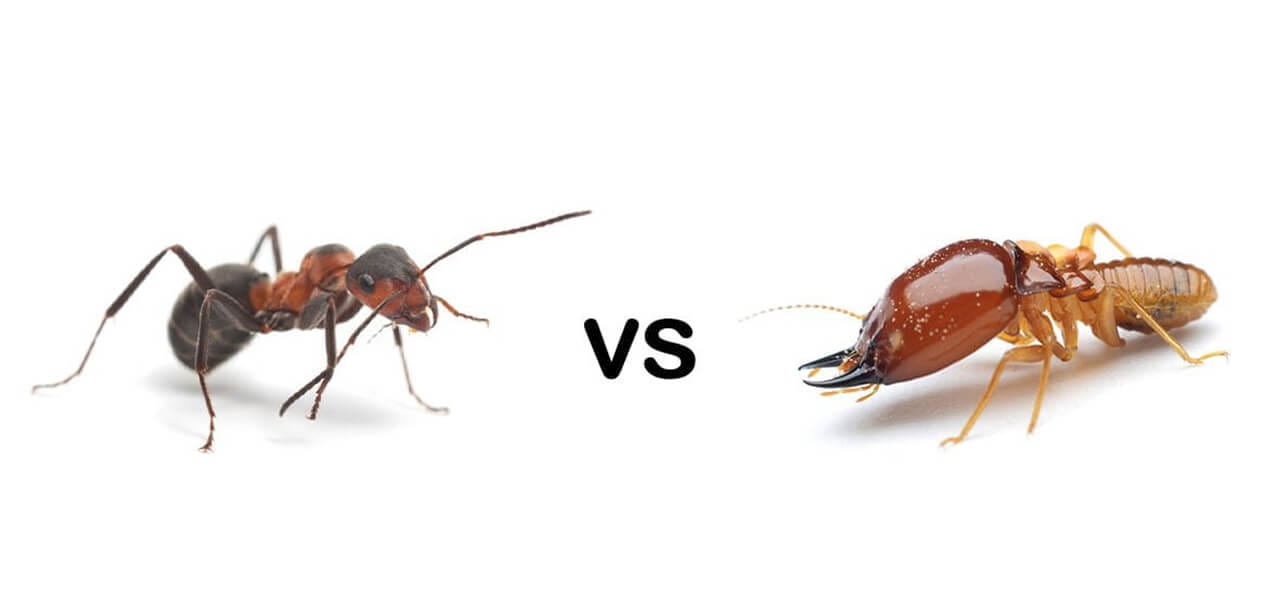
Ants and termites are sometimes mistaken for each other. However, they are very different insect groups. Several key features help to identify them correctly.
Antennae
- Ants: Elbowed.
- Termites: Simple string of bead-like segments.
Eyes
- Ants: Compound eyes present.
- Termites: No eyes.
Waist (called a pedicel, found between thorax and abdomen)
- Ants: Present.
- Termites: Absent.
Abdomen
- Ants: Pointed at end.
- Termites: Blunt at end.
Castes
Both ants and termites can be divided up into several ‘castes’, which depend upon their roles in the colony.
- Workers
- Ants: Sexually undeveloped females.
- Termites: Sexually undeveloped males and females.
- Soldiers
- Ants: Are workers and may have dual role.
- Termites: Sexually undeveloped males and females. There are two possible body forms: mandibulate (jawed) and nasute (long-nosed), depending on species.
- Reproductives (winged)Both ants and termites can have a winged stage in their reproductive cycle.
- Ants: Fore/hind wings unequal, strongly veined
- Termites: Fore/hind wings equal, no obvious veins
Life cycle
- Ants: Complete metamorphosis: egg, larva, pupa, adult
- Termites: Incomplete metamorphosis: egg, nymph, adult (no pupal stage)
Diet
- Ants: ants are scavengers, with different species foraging for different foods. Some ants live within damp/decaying wood, but do not actually eat the wood.
- Termites: termites are plant tissue specialists, feeding on wood and grasses, and some species can cause extensive damage to buildings and trees through their feeding and nesting habits.
Scientific classification
- Ants: Order Hymenoptera, Family Formicidae
- Termites: Order Isoptera, several families
Problems with ants or termites?
If you’ve identified the insects in your home as ants rather than termites, the next step is identifying the species — as treatment varies significantly. Argentine ants require slow-acting bait; fire ants (a declared Queensland biosecurity pest) require specific approved treatment. Our ant pest control service covers all common Queensland. If you’re unsure whether you have ants or termites, contact us — our licensed technicians can identify the species and recommend the appropriate treatment.