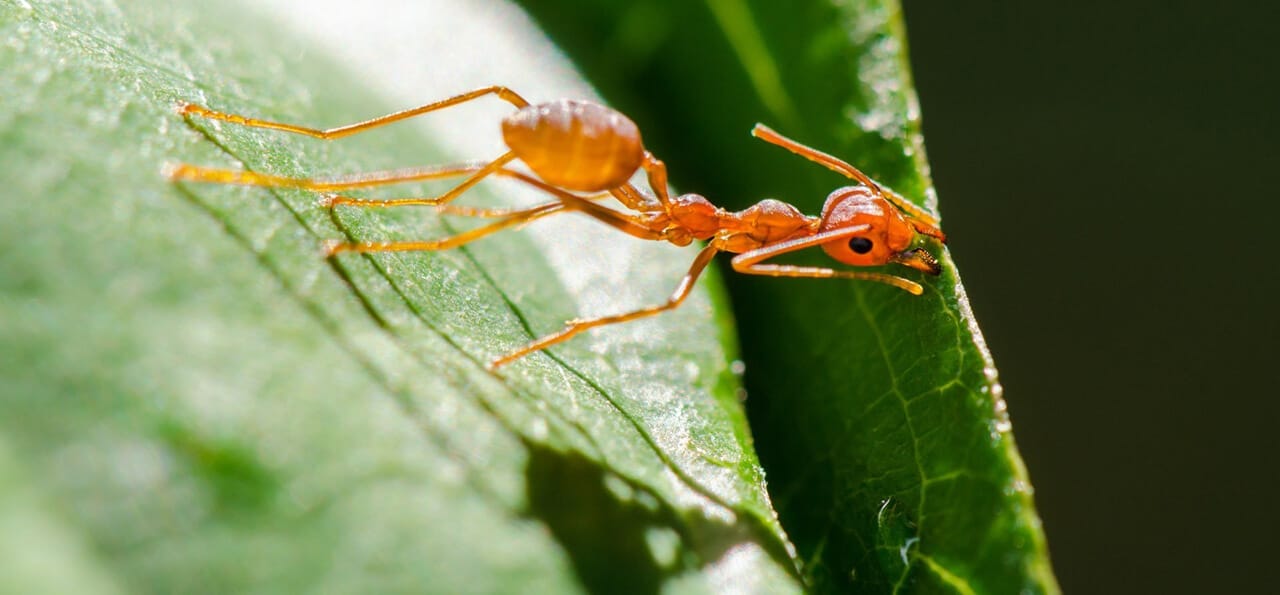
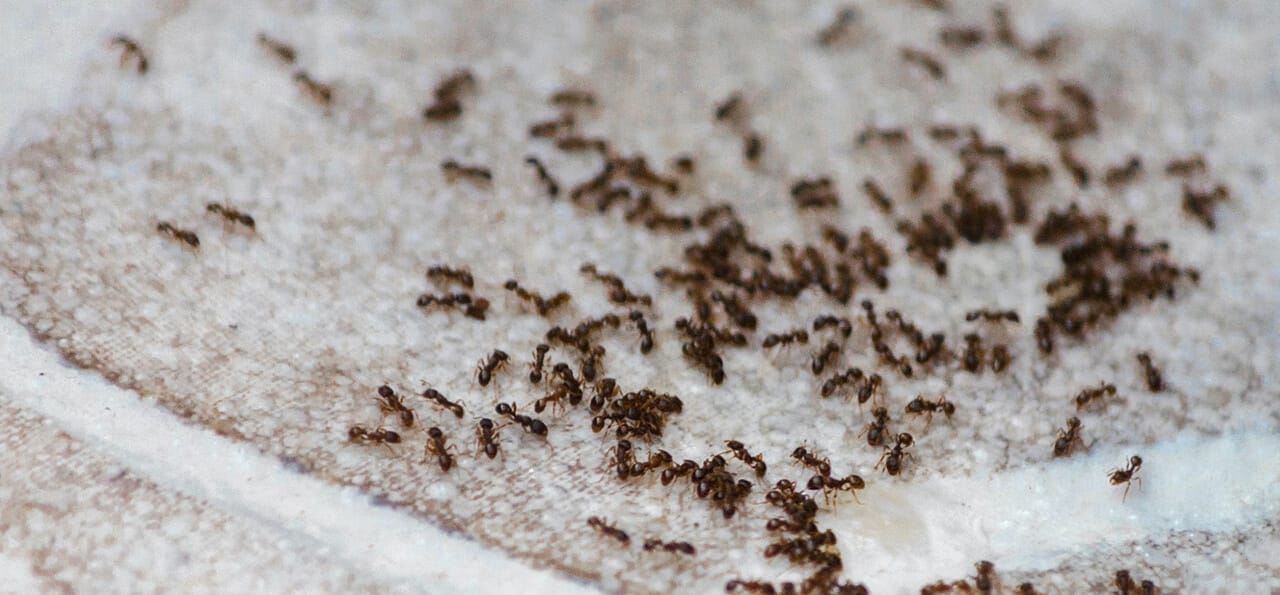
If you’ve seen a few ants scuttling around on the floor, they might be just having a look around. However, they might be the sign of a larger ant infestation.
Have you spotted ants?
Call The 99 People today for advice and to schedule an ants inspection of your home.
Ant infestation signs
- Live ants – If you’re seeing large numbers of live ants then you may well have a problem. If you find them in your kitchen or in areas where you prepare food, then you need to do something about it fast.
- Ants pathways – In and out of your home or premises are another sign. Some types of ants will lay down a pheromone trail to a food source. This chemical attracts other ants to find food.
- Ant nest – A nest site can look like a small pile of soil or dirt. Some species of ants like to make their home in walls or other quiet, dark places, which are more difficult to spot.
How to deal with an ant infestation
DIY products like ant killer gel can help with minor garden ant problems. But for larger infestations, multiple species, or ants that have entered the kitchen or bathroom, professional treatment is significantly more effective.
Different ant species require different approaches — Argentine ants need slow-acting bait carried back to the colony; fire ants (a declared Queensland biosecurity pest) require specific approved methods. Our ant pest control service covers all Queensland species, with treatments safe for families and pets.
Ant facts
- Ants belong to the insect order Hymenoptera. They are close relatives of bees and wasps.
- Each colony can hold up to half a million ants. They can all get up and go very quickly if the colony is threatened.
- Worker ants can live for up to seven years, while a queen can live for up to 15 years.
- Ants swarm once every year in August. The young queens fly away and set up their own, new colonies. If you hear people talking about flying ants, this may be the swarm they are referring to, or they could be termite alates (winged reproductives).
Not sure if you’re dealing with ants or termites? Here’s how to tell the difference.